
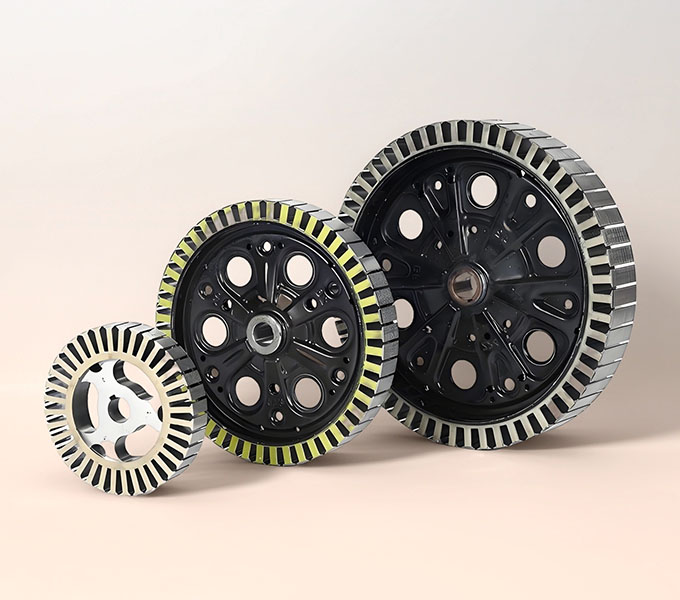

Applications

Lamination Stacks for BLDC Motor Manufacturer

Your motors will run cooler. They will be stronger. They will be more accurate. This is what you get with Sino’s laminations for servo motor. We build the core of your motor, the magnetic center, to give you the best results. Our high-quality lamination stacks for servo motor help you make smaller, faster, and more powerful motors for your most important jobs.

At Sino, we understand you need top-quality parts for your advanced machines. You need parts that work correctly every single time. Our laminations for servo motor, made from electrical steel, are built for the highest quality. They are the secret to making a great servo motor. We help you get great energy savings and precise control in every motor you create.

The Sino Advantage: The Right Core for Your Motor

The core of a motor is made of many thin metal sheets. These sheets are called laminations. We make all the parts you need for a full motor core, including complete lamination stacks for servo motor.

Stator and Rotor Parts

We make both the stator laminations, which form the fixed outer part of the motor, and the rotor laminations for the spinning inner part. When put together, they create a perfect stator and rotor stack.

Strong Stacks

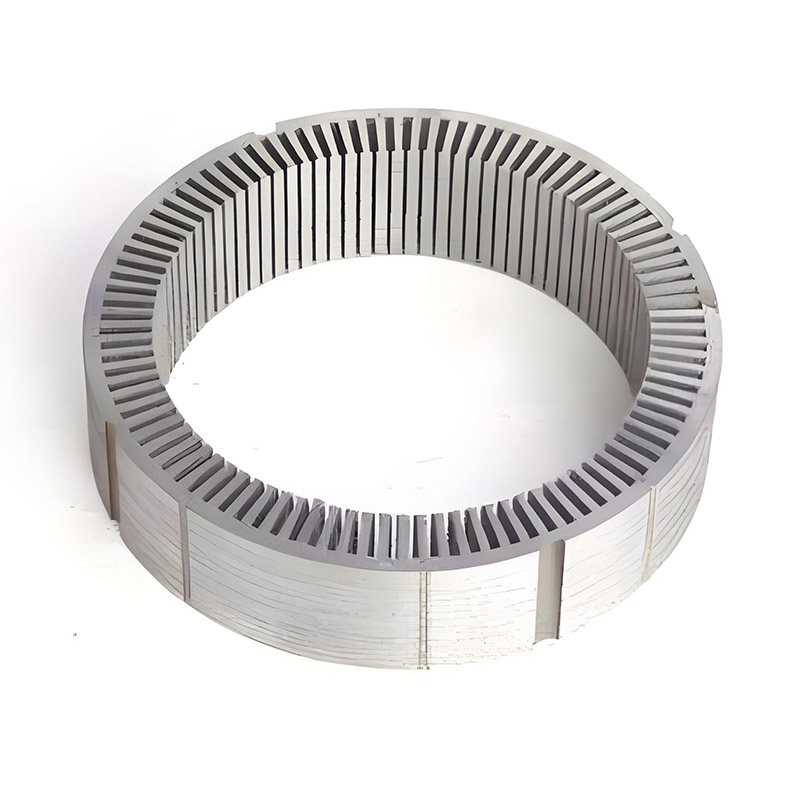
We carefully stack each thin sheet to build a solid lamination stack for servo motor. This strong iron core guides all the magnetic energy. We make sure the shape and size of the laminations for servo motor are a perfect match for your design.

Special Shapes

The core is made with teeth and slots. We make the tooth and yoke parts to your exact needs. We also check that the slot insulation fits perfectly to keep the wires safe.

Key Details

Every small detail is important. We focus on the air gap. This is the very small space between the stator and rotor. A perfect air gap gives you more power. We also create special end laminations that help keep the stack strong. If you need your motor to run extra smoothly, we can make skewed rotor laminations. For some types of motors, we also make exact pole laminations.
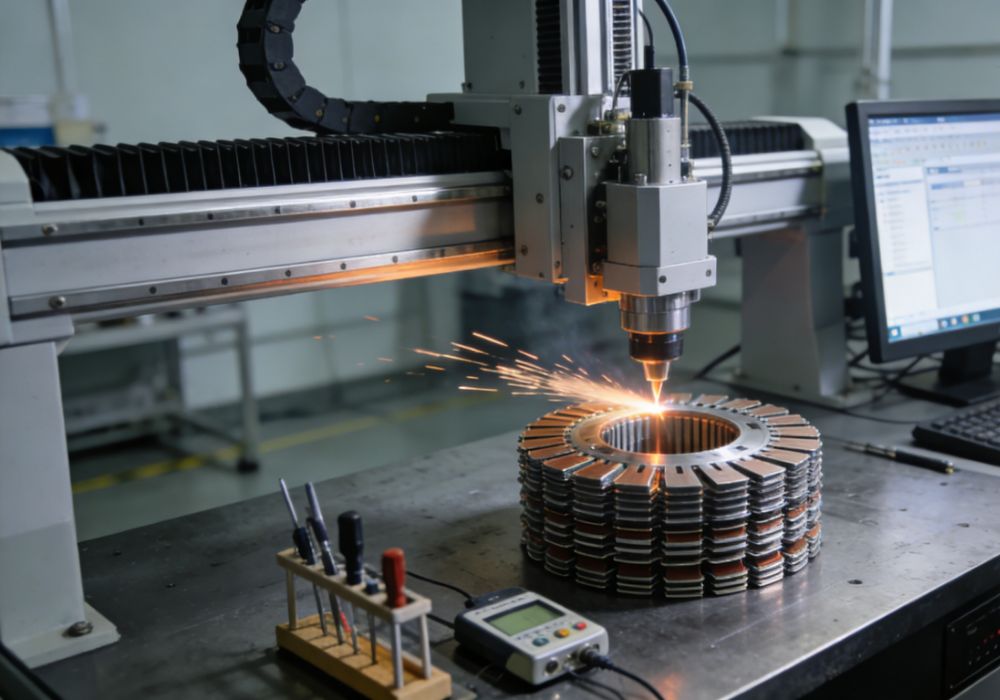
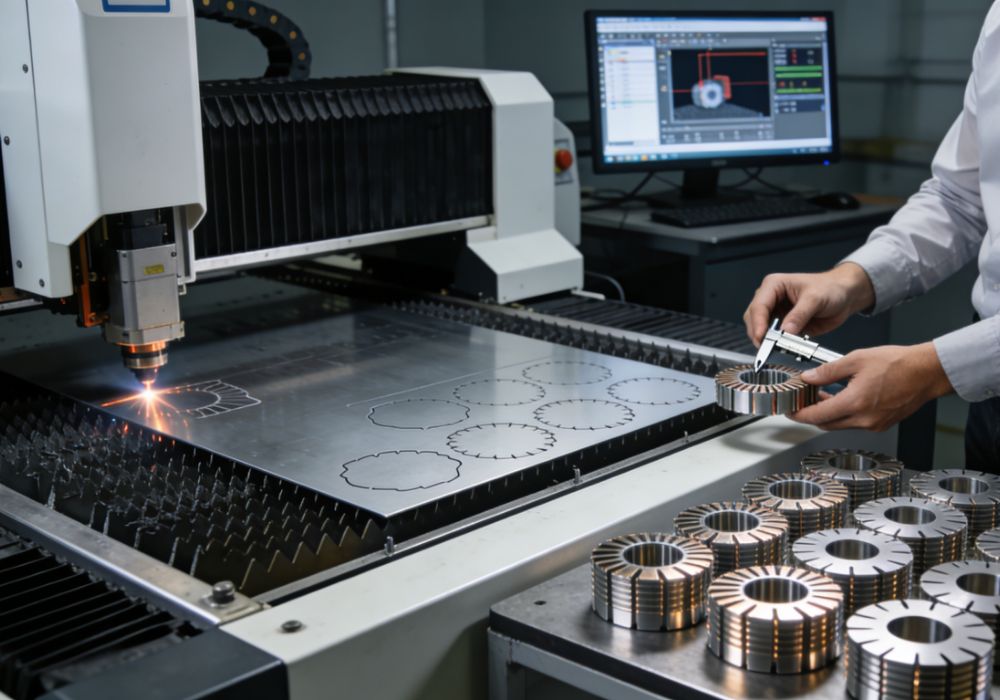
We can build a segmented stator, which makes it easier to add the wires. Our team works carefully to make sure every stator core assembly and rotor core assembly is made without any mistakes.

Great Materials for Top Performance

Choosing the right material for the core is a very important first step. This choice decides how much magnetic power the motor can handle, how much energy it loses, and how hot it can get. Sino uses only the best materials for our laminations for servo motor to give you top performance.

Silicon Steels (Electrical Steels)

Silicon steels are the most common material for many motors. This is because they are easy to make and offer great performance for the price. For servo motors that run at high speeds, thinner sheets (like 0.20 mm, 0.27 mm, or 0.35 mm) are needed to reduce energy loss from eddy currents. For general servo motors where price is a main concern and the motor runs at normal speeds, silicon steels are a great all-around choice. After stamping the parts, we heat them up. This is a very important step called stress-relief annealing. It helps bring back the material’s magnetic strength.

Cobalt-Iron Alloys

For jobs that need the most torque and power possible in a small space, cobalt-iron (Co-Fe) alloys are the best choice. They have the strongest magnetic field capacity of any soft magnetic material you can buy. They are perfect for high-torque direct drive motors, parts for airplanes and spacecraft, and robots. These are all areas where making things small and light is the most important goal.

Amorphous & Nanocrystalline Metals

These materials are very different from regular metal structures. This gives them special magnetic and electrical abilities. They are the best for very fast servo motors (over 10,000 RPM), high-speed drives, and any job where saving energy is the top priority. When designing with them, you have to be careful because they can be brittle.

Material Properties Comparison Table

Property

Silicon Steel (M19, 0.27mm)

Cobalt-Iron Alloy (49% Co)

Amorphous Metal

Nanocrystalline Metal

Saturation Flux Density ($B_{sat}$)

~1.9 T

~2.35 T

~1.56 T

~1.2 T

Electrical Resistivity ($\rho$)

~50 µΩ·cm

~40 µΩ·cm

~130 µΩ·cm

~115 µΩ·cm

Core Loss @ 1T, 400Hz ($P_{core}$)

~10 W/kg

~25 W/kg

~1.5 W/kg

~0.8 W/kg

Thermal Conductivity ($\lambda$)

~25 W/(m·K)

~30 W/(m·K)

~9 W/(m·K)

~12 W/(m·K)

Relative Cost

1x

15-25x

8-12x

10-15x

Typical Thickness

0.20 – 0.65 mm

0.10 – 0.35 mm

0.015 – 0.025 mm

0.015 – 0.025 mm

Protective Coats: Every lamination in our lamination stacks for servo motor gets a special insulation coating. This coating stops the thin metal sheets from touching each other. This is very important to prevent energy loss. We use top-quality coatings, such as the standard C5 coating or a special epoxy coating for laminations.

How Sino Makes Perfect Laminations for Servo Motor

The benefits of a great material can be lost if the parts are not made well. At Sino, we use the best methods for making our laminations for servo motor. As your partner, we have perfected our ways of working. This makes sure you get all the benefits from the high-quality materials we use.

Lamination Cutting Technologies

Stamping (Punching): This is the best method for making a lot of parts. It is very fast and the cost for each part is low. Stamping can cause stress in the metal and create small, sharp edges called burrs. We fix this. We always heat the parts after stamping (stress-relief annealing). We also take great care of our tools. This keeps the burrs extremely small, only a few microns high.

Laser Cutting Laminations: This method doesn’t need special tools. This makes it perfect for making sample parts quickly. It’s also great for complex shapes and for making small or medium numbers of parts. We use special laser settings and follow-up steps. This reduces the area damaged by heat (the HAZ). It also stops tiny short-circuits from forming between the laminations for servo motor.

Abrasive Waterjet Cutting: This is a “cold-cutting” method. It uses a high-pressure stream of water with tiny particles. It creates almost no heat stress or HAZ. This leaves a smooth edge with no burrs. It is a great choice for cutting thick materials. It’s also good for materials that can be damaged by heat.

Wire EDM Cutting: To make sample motor laminations, we use a very thin wire with an electrical spark to cut the steel. This process is called wire electrical discharge machining (EDM). It is a slow process, but it creates perfect parts.

Notching and Punching: We also use notching and high-speed punching machines for different designs.

Ways to Insulate and Join the Laminations

Interlocking: This is a cheap and fast way to put the stack together. But, it can cause small short-circuits and stress spots. These problems can lead to more energy loss and can block heat from moving through the stack.

Welding: Welding makes the stack very strong and rigid. However, the welds create a path for eddy currents to flow. This can greatly increase energy loss. We usually only use welding when the stack’s strength is the most important thing.

Adhesive Bonding (Backlack): This is the best method for high-performance motors. Here is how it works: We coat each lamination with a special glue. Then, we cut, stack, press, and heat the stack to harden the glue.

  • Electromagnetic Performance: This creates a perfect, even layer of insulation between each lamination. This results in the lowest possible energy loss from eddy currents.
  • Mechanical Rigidity: The final core is very strong and keeps its shape perfectly. This means less vibration and a quieter motor.
  • Thermal Performance: The glue fills in the tiny gaps between the laminations. This makes it much easier for heat to travel out of the stack. Because the motor can cool better, it can run with more power continuously. This results in a higher power density for the lamination stack for servo motor.

Riveting of Laminations: We can use small metal pins called rivets to hold the stack. We also use a method called cleating of laminations.

Finishing Touches

Lamination Annealing: After the parts are made, we heat them in a special oven. This makes the steel work even better. 

Deburring of Laminations: We make sure there are no sharp edges. Every part is smooth.

Powering Your Most Important Equipment

Our laminations for servo motor are used in many kinds of motors and machines. They give the power and control that modern technology needs.

Motor Types We Support:

AC servo motor laminations
DC servo motor laminations
Brushless DC (BLDC) motor laminations
02
Permanent magnet servo motor laminations
03
Stepper motor laminations
04
Induction motor laminations
05
Linear servo motor laminations

Application-Specific Stack Designs

The best lamination stack for servo motor is not a one-size-fits-all part. It is a custom part, designed for the exact needs of your final product. We work together with you to create these custom solutions.

High-Speed Robotics & Automation

  • Needs: Fast speeds (RPM), quick starting and stopping, low weight, and high energy savings.
  • Sino’s Solution: We use thin silicon steel or amorphous metals. We focus on cutting down energy loss from eddy currents at high speeds. We use precise manufacturing and always use adhesive bonding. This gives the motor strength and helps it stay cool.

High-Torque Direct Drive Systems

  • Needs: Very high torque all the time and in short bursts at low speeds. The goal is to get the most torque for the motor’s weight (Nm/kg).
  • Sino’s Solution: We use cobalt-iron alloys to get the strongest magnetic field. We use special, strong stamping tools. We use a high-temperature heating process (annealing). We also use adhesive bonding to help deal with the heat created by the copper wires.

High Power Density Actuators (e.g., Aerospace)

  • Needs: The most power possible for the least amount of weight. Must be very reliable. Must work well in very hot places.
  • Sino’s Solution: We use cobalt-iron alloy because it has a strong magnetic field and can handle high temperatures. We use advanced making techniques, like building in cooling channels. We also use special glues that are good at moving heat. This helps create the best path for heat to escape.

Get Performance You Can't Beat with Sino

When you choose Sino, you get better performance. Our laminations for servo motor are made to solve the biggest challenges in motor design. We do this by improving performance in many different areas at once.

01
1
High Efficiency & Less Core Loss
Our main goal is to cut down on energy losses. These losses are called eddy current loss and hysteresis loss. This means almost no power is wasted as heat. We do this by choosing the right materials and using thinner laminations for servo motor. We also use high-quality insulation. After stamping, we use a carefully controlled heating process (stress-relief annealing).
02
2
More Power & Power Density
Our designs help you get more torque and power from a smaller motor. We use the best joining methods, like adhesive bonding. This can make the lamination stack for servo motor ten times better at moving heat out. Because the motor stays cooler, you can run more electricity through the wires all the time. This directly leads to more continuous torque and power from a motor of the same size.
03
3
Smooth and Quiet Operation
We focus on reducing something called 'cogging torque,' which causes a jerky motion. How well we can reduce this is all about how precisely we make the parts. We can make complex shapes very accurately, time after time. Our stacking is also very precise. This makes the magnetic path inside the motor nearly perfect. The result is a motor that runs very smoothly and quietly, with little noise or vibration.
04
4
Perfect Control & Fast Response
A good magnetic core is key for a great motor control system. This allows you to control the motor's speed and position very accurately. It means the motor can react quickly and speed up fast.
05
5
Great Magnetic Power
We use materials that are very good at carrying a magnetic field. This means the magnetic field inside the motor is strong and well-directed.
06
6
High Electrical Resistivity
The material we use is good at resisting the flow of electricity. This is another way we help reduce wasted energy.

Quality and Design You Can Trust

At Sino, we use the best software to design your parts. Our engineers use computer programs to design and test ideas before making anything. We use a method called Finite Element Analysis (FEA). This lets us see exactly how the magnetic field will work. This helps us make the magnetic path design perfect for your laminations for servo motor.

We test everything. We check the insulation on the laminations to make sure the coating is working perfectly. We check the Back EMF (Electromotive Force) to be sure the motor will perform as expected.

We follow all the important rules for quality. We use the standards set by top international groups. This includes groups for testing materials and electrical parts. This ensures our parts are safe, dependable, and compatible with other parts made anywhere in the world. To promise quality, we use machines from the best equipment makers for our stamping, laser cutting, and EDM. Our entire quality system is designed by experts.

Choose Sino for the core of your next servo motor. Contact us today to speak with our engineers. We can give you a price quote for your project. Let our lamination stacks for servo motor help you build a better, stronger, and more accurate machine.