
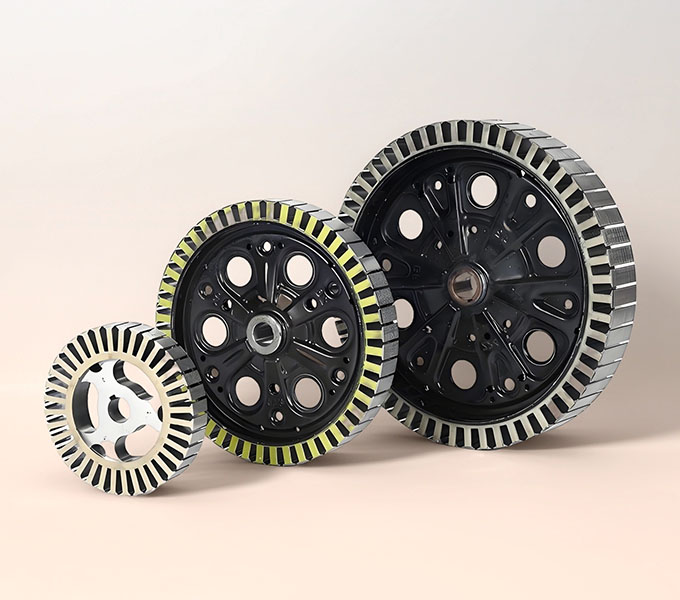
Get more power and use less energy with Sino’s carefully made engine laminations. Our engine laminations make your motors run better, cooler, and for a longer time. We build the magnetic center of your machine. This core, made from our engine laminations, makes your motors stronger and more efficient.
At Sino, we use the very best materials and tools. We create engine laminations that give you an advantage. You get higher power density and torque density. This means you get more power from a smaller motor. Our engine laminations help you build the very best products.
With Sino’s engine laminations, you can build motors that are the best in the world. Our engine laminations help you reduce energy loss. This saves you money and is good for the environment. Our parts also lower noise and shaking. This makes your products run quietly and smoothly. We build engine laminations for everything from small tools to giant turbines. Let Sino help make your next project a big success.
When you choose Sino, you are choosing a better motor. Our engine laminations are made with great care to give you the best results.
Our engine laminations have very low “core loss.” This means they waste very little energy. More of your electricity is turned into real power. It prevents energy from being wasted as heat. This makes your engine much more efficient. We do more than just report the total energy loss. We use special computer models to break down the total loss into its different parts: hysteresis, eddy current, and excess loss. This detailed information helps engineers improve their designs. It also allows us to measure and perfect how we make our engine laminations.
Keeping things cool is a top goal at Sino. Our engine laminations are designed to pull heat away from the motor. A cooler motor lasts longer and works harder. We have created special models and tests. These tests measure how well our engine lamination stacks move heat. This is very important for a machine’s ability to run for a long time. For rotors that spin very fast, we do special tests. We do burst speed tests and modal analysis. These tests make sure our engine lamination cores can handle the stress of high-speed work.
Our engine laminations stop shaking and noise. This is often called Noise, Vibration, and Harshness (NVH). Our smooth, tightly packed engine lamination stacks make motors run very quietly. Our careful stamping and laser cutting let us create the best tooth shapes. This allows more wire to fit in the slots. It also reduces unwanted jerking in the motor.
We use strong materials like silicon steel. Our engine laminations can handle high speeds and heavy work. They are very strong and do not rust easily. Our careful methods usually achieve stacking factors of 95-98%. This makes sure the engine lamination core is solid and strong.
We make engine laminations that are custom-built for you. We can change the size, shape, and material to perfectly match what you need. We help you get the very best magnetic performance from your engine laminations.
Choosing the right material for the core is the most important part of designing engine laminations. It controls how your motor works. At Sino, we offer a wide range of soft magnetic materials. Our experts will help you choose the very best one for your needs.
Our material experts will work with your designers. We will help you weigh the pros and cons. Together, we will choose the material that gives you the best performance for your project and budget.
At Sino, we are experts in making parts with great care. We can turn your design from a drawing into a real, finished part. We can make single test parts or thousands of parts for you. At Sino, we believe that making the part is a key piece of its design. It’s not just a final step.
Our factory uses the best machines. We have top-of-the-line tooling (dies). This allows us to make engine laminations very quickly and accurately. We use automatic assembly machines to build your parts carefully. This makes sure every single part is perfect.
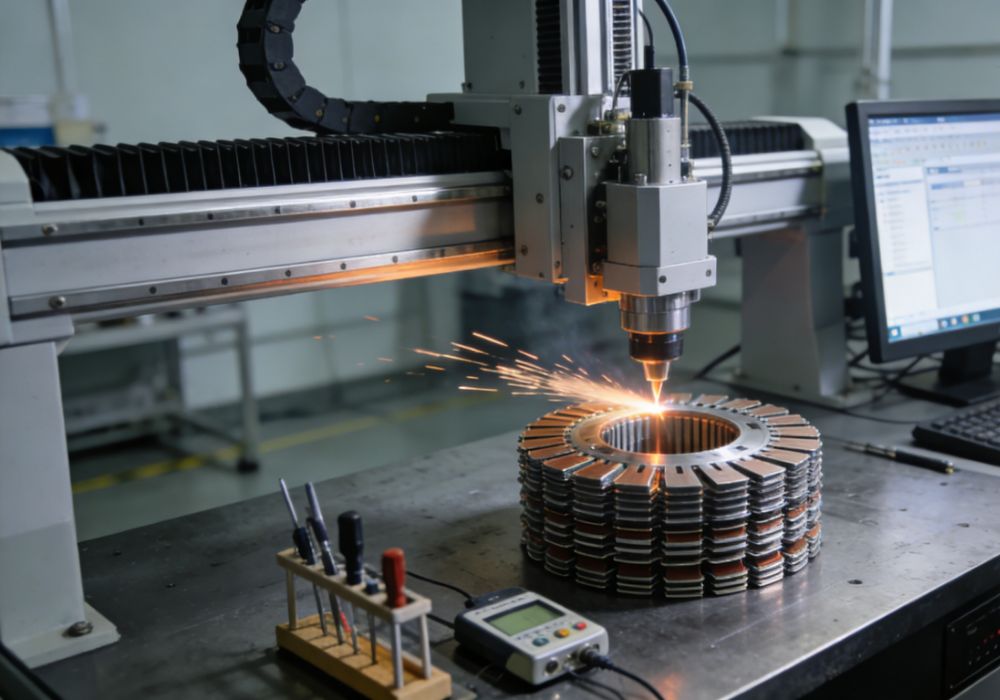
Stamping/Punching: This is the most common way to make a lot of parts. We reduce problems like stress and rough edges. We do this by carefully taking care of our tools and using a special heating process. This heating process fixes the magnetic properties of the engine laminations.
Laser Cutting: This is great for making test parts or complex shapes because you don’t need to buy special tools. We use advanced laser controls. We can also use an optional chemical process. This helps to reduce the area damaged by heat (called the HAZ) and keeps the magnetic properties safe.
Interlocking (Staking): This is a low-cost and fast way to assemble parts. It locks the engine laminations together mechanically.
Welding (Laser or TIG): This method creates a very strong and stiff connection. Our special laser welding techniques use carefully controlled energy. This creates a strong bond but doesn’t go too deep. This protects the insulation between each of the engine laminations.
Bonding (Adhesive): Using a special glue provides great strength and stiffness. It also helps the stack of engine laminations get rid of heat much better. We use “Backlack,” a self-bonding coating. The glue is already on the steel before we start. This makes sure the bond is perfectly even.
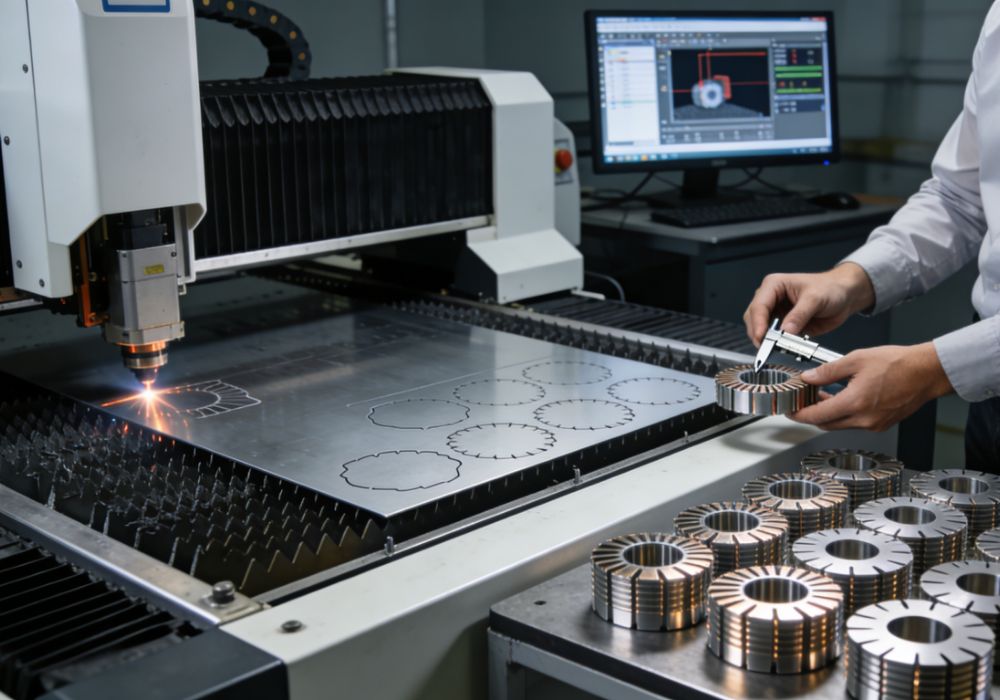
Choosing the best cutting and joining method is something we do together with you. This way, we make sure the final engine laminations meet all your goals for performance, strength, and cost.
The shape of the engine lamination stack is just as important as the material we use. We have the tools and skills to make a huge variety of shapes for modern electric machines. Our engine laminations are used in many amazing products. From self-driving cars to life-saving medical tools, Sino’s engine laminations are there.
Radial Flux Machines: This is the most common type of motor design.
Stator Cores: Our careful stamping and laser cutting let us create the best tooth shapes. This allows more wire to fit in the slots and also reduces unwanted jerking in the motor.
Rotor Cores: For permanent magnet (PM) motors, our rotor engine laminations have special pockets to hold the magnets. In Interior Permanent Magnet (IPM) motors, which are common in electric cars, the bridges in the engine laminations are important. They go over the magnets. These bridges need to be strong, but they must not block the magnetic field. We are experts at making these tricky parts very carefully. This makes sure they are strong without hurting the motor’s magnetic power.
Axial Flux Machines: These are also called “pancake” motors. This design can give you more power in a smaller space. The engine lamination cores are more complex. They are made from either wound, donut-shaped cores or from separate pieces. We have created special ways of making both types of cores. This ensures they are made to the exact right size and have great magnetic properties.
Automotive (Electric Vehicles): Our stator engine laminations and rotor engine laminations are a perfect fit for electric car motors. In electric cars, this means the car can drive farther and go faster. We also make cores for Integrated Starter-Generators (ISGs). These need to work well for two different jobs across many different speeds.
Industrial Machinery: Factories use our engine laminations in all kinds of machines. You can find them in every induction motor, brushless DC motor, and switched reluctance motor. We also make parts for quick-moving solenoids and actuators. For these, the engine lamination stacks must be designed to reduce eddy currents. This ensures the parts move quickly and in the same way every time.
Aerospace: Planes and spacecraft need parts that are both light and strong. For parts that spin at tens or hundreds of thousands of times per minute (RPM), the rotor engine laminations must be incredibly strong. This is to survive the huge forces created by spinning so fast.
Power Tools: Drills, saws, and other tools need to be powerful but also light. Our engine laminations help make tools that are easy to use but still strong enough for any job.
Renewable Energy: Our engine laminations are inside the generators of giant wind turbines. They help change the power of the wind into clean electricity for our homes.
Appliance Motors: Your home has many motors in it. Our engine laminations are in washing machines, dryers, and air conditioners. We help make them quiet and use less energy.
A great stack of engine laminations is one where you can prove and understand how well it works. At Sino, we use the best computer tools to design your parts. We use Finite Element Analysis (FEA) software for magnetic modeling. This lets us see exactly how the magnetic field will work inside your motor.
We use a set of special tests to measure the performance of the core. These tests give you the very accurate data you need for your own design and computer simulations.
Core Loss Measurement and Analysis We use standard industry tools like the Epstein Frame (IEC 60404-2) and the Single Sheet Tester (SST) (IEC 60404-3). These tools help us accurately measure the B-H loop, permeability, and core loss. This also helps us check the effect of how we make our engine laminations.
Stacking Factor: We measure how tightly the engine laminations are pressed together. This is a key factor for getting more power in a smaller space. Our careful methods usually achieve stacking factors of 95-98%.
Thermal Conductivity: We have created special models and tests to measure how well our engine lamination stacks move heat. This is very important for a machine’s ability to run for a long time.
Mechanical Integrity: For rotors that spin very fast, we do burst speed tests and modal analysis. These tests make sure our engine lamination cores can handle the stress of high-speed work.
Our advanced methods include photochemical machining (PCM). We use this for very thin and complex parts. Our special machines for slitting and cutting steel prepare the raw material perfectly. And our automatic stacking machines make sure our engine laminations are lined up perfectly every time.
Let the experts at Sino help you design the perfect motor core from our engine laminations for your project. Contact us today to get started. We are ready to help you succeed.