
Applications

Lamination Stacks for Fan Motors Manufacturer

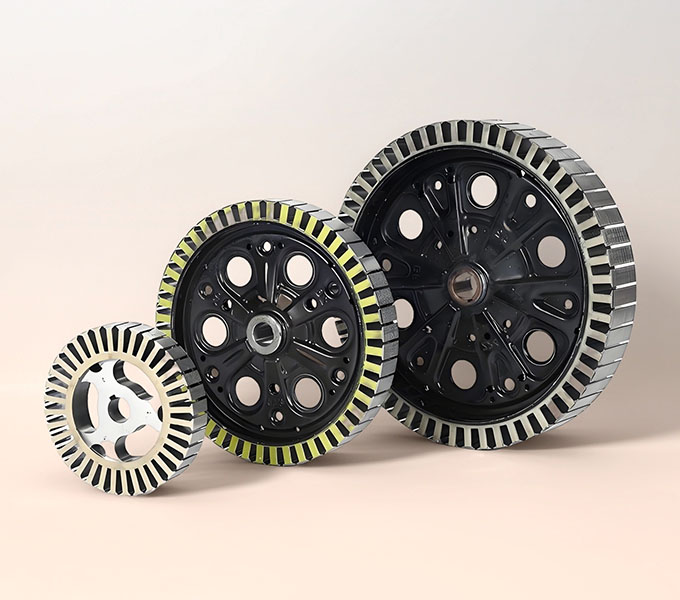
Your fan motors can work better. They can use less electricity, create less noise, and have a much longer life. The secret is found inside the motor. With Sino’s fan motor core laminations, you get a big head start. We make our stator and rotor parts to improve how well your motor uses energy. This means your fans can do more work without wasting power.

Our goal is simple: to help you build a better motor. Our fan motor core laminations are designed to stop energy from being wasted. This makes your fans cost less to operate. It also helps them run cooler. A cool motor is a happy motor that will work well for many years. We focus on making sure the magnetic field is used perfectly. This means all the power is used for spinning the fan, instead of making extra heat or noise. You can trust Sino to help make your fan motors the best they can be.

The Sino Advantage: Better Performance, Less Waste

A great fan is one that moves air so quietly you barely know it’s there. A key goal for us at Sino is to reduce noise and shaking. Our fan motor core laminations are made very carefully. This careful process stops the tiny vibrations that can grow into a loud humming sound. The result is a fan that runs smoothly and quietly.

We get this quiet power by using careful science in our designs. Our special design helps to lower energy loss from “eddy currents.” Eddy currents are tiny swirls of energy that escape as heat.

We also work hard to lower “hysteresis loss.” This is the energy that gets wasted each time the motor’s magnets turn on and off. By stopping these types of energy waste, our fan motor core laminations help your motor manage its heat better. This means it runs cooler and lasts much longer.

The magnetic field inside the motor is used perfectly. This gives your motor more “torque.” Torque is the twisting force that makes the fan blades spin. More torque means the fan can move more air. It also helps the fan get up to its top spinning speed very quickly.

Our fan motor core laminations are also designed to pack a lot of power into a small space. This is called high power density. It lets you build a very strong motor that can fit inside a small case.
Lamination Needs for Different Fan Motor Uses

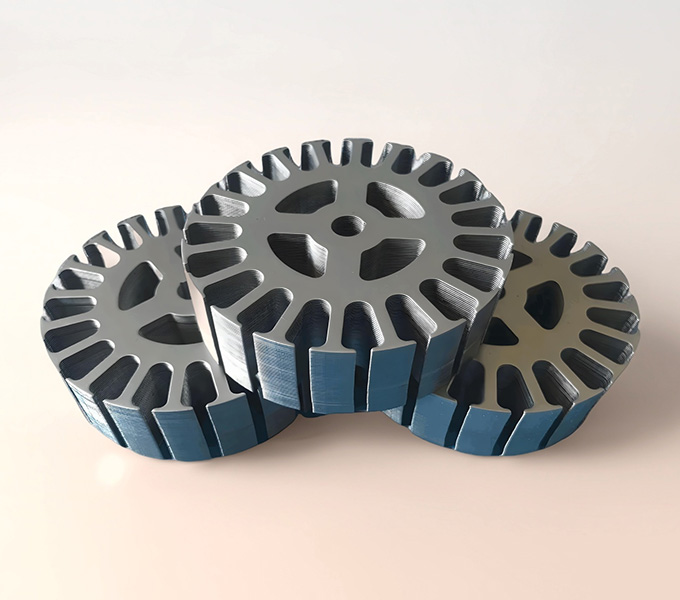
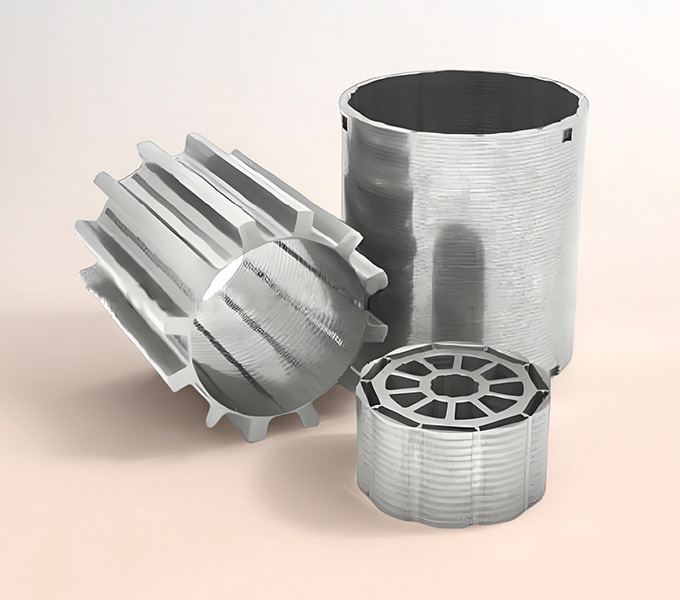
The name “fan motor” is used for many different kinds of products. Each of these products has its own special needs, and sometimes these needs are opposites. Our way of working is to design our fan motor core laminations from the very beginning to fit each specific job. We do this by learning all about how and where the fan will be used and what it needs to do well.
Data Center and High-Performance Computer (HPC) Cooling

This area has a very strong need for motors that use very little energy and are great at getting rid of heat.

  • What the Motor Needs to Do: Motors in these fans often run all the time at very high speeds (10,000 – 30,000 RPM or even faster). This is to move the most air possible for every watt of power used. The goal for energy use is extremely high, often needing to be better than 90%.
  • How Our Laminations Help: The high spinning speeds mean the electricity inside the motor is switching very fast (often over 400 Hz). This requires using very thin fan motor core laminations (from 0.1mm to 0.35mm thick) to stop a lot of energy loss from eddy currents. The steel used must lose very little energy (measured in W/kg) when the electricity is switching this fast.

Heating, Ventilation, and Air Conditioning (HVAC) Systems

In this market, we need a good balance between using energy well, keeping costs low, and making sure the fan is quiet.
  • What the Motor Needs to Do: Fans that can change their speed are now common to make them more energy-efficient all year round (which improves SEER ratings). Having a lot of torque in a small motor is important for fans that are connected right to the motor. And most importantly, customers want these fans to be extremely quiet.
  • How Our Laminations Help: These motors often spin slower but need more twisting force (torque). This means we need to use materials that can handle a lot of magnetic energy ($B_{sat}$) to create more torque without making the motor too big. The shape of our fan motor core laminations is designed to reduce small vibrations and uneven spinning, which is very important for making the fan quieter.

Automotive Parts (Engine Cooling, HVAC, Battery Cooling)

This is the toughest area for fan motors because they must be very dependable, strong, and quiet.

  • What the Motor Needs to Do: Parts have to work perfectly in very hot and very cold weather (from -40°C to +150°C). They also must handle a lot of shaking and bumps. For electric vehicles (EVs), using energy well is key to getting more miles from a battery charge, and being quiet is extremely important to the driver.
  • How Our Laminations Help: To get a lot of power from a small motor, we choose materials that let magnetic energy pass through easily and can hold a lot of it. The shape of the fan motor core laminations must be designed to make the motor spin very smoothly. We often use special locking methods or glues to make sure the core stays strong and solid, even when it is shaking a lot.

Consumer Electronics and Appliances (Laptops, Projectors, Air Purifiers)

For this market, the most important things are low cost, small size, and very strict rules about noise.

  • What the Motor Needs to Do: Making things smaller is a major goal. The sound quality is very important. The fan needs to be quiet (low dBA), but the sound it does make should not be annoying to listen to.
  • How Our Laminations Help: We often use thin sheets of steel (from 0.2mm to 0.35mm). The shape of the fan motor core laminations can be very complicated to get the best performance out of a tiny package. When we make these parts, every single one must be almost exactly the same to make sure that the sound of the fan doesn’t change from one product to the next.

The Science of Our Core Materials

Choosing the right material for the core is the first step in designing a great motor. At Sino, we do more than just buy steel. We work very closely with the best steel makers. We also do our own detailed tests to understand exactly how each type of steel works. This helps us give our partners the best advice on which material to choose. We help them find the perfect balance between magnetic power, heat handling, strength, and cost for their fan motor core laminations.

Non-Oriented (NO) Electrical Steels

These are the most commonly used materials for most fan motor jobs.

  • Types and Qualities: We use many different standard types of steel (like M235-35A and M270-50A). The less expensive steel types can handle more magnetic energy and cost less, which is good for products where price is a big concern. The more advanced steel types waste less energy, especially when the electricity is switching fast. These are the best choice for high-performance fans in HVAC and data centers. Our main material is Cold Rolled Motor Lamination (CRML) steel, also known as CRNGO (Cold-Rolled Non-Grain-Oriented) Steel.
  • What We Do Better: We give our customers detailed charts showing how much energy is lost at many different electrical speeds (50Hz, 400Hz, 1kHz, and more) for each material. We don’t just give the single number from the spec sheet. This helps engineers predict energy loss much more correctly when they design motors using computer programs.

Amorphous and Nanocrystalline Alloys

These special materials lose very little energy at medium to high electrical speeds (over 1kHz). This makes them a perfect choice for motors that spin extremely fast. We have created special ways to handle and laser cut these materials to build cores for unique, top-performance motors.

Soft Magnetic Composites (SMCs)

SMC materials are special because the magnetic field can flow through them in all directions (3D), not just along a flat sheet. This opens the door to completely new motor designs. They are perfect for small, fast, and complex-shaped fan motor core laminations where being able to use 3D magnetic paths is more important than some other material properties.

Precise Manufacturing and Assembly

At Sino, we believe that how a part is made is just as important as how it is designed. We use the latest technology and have very strict controls at every step of the process. This makes sure that the great qualities of the raw steel are turned into a finished stack of fan motor core laminations that performs at its best.

Cutting the Steel

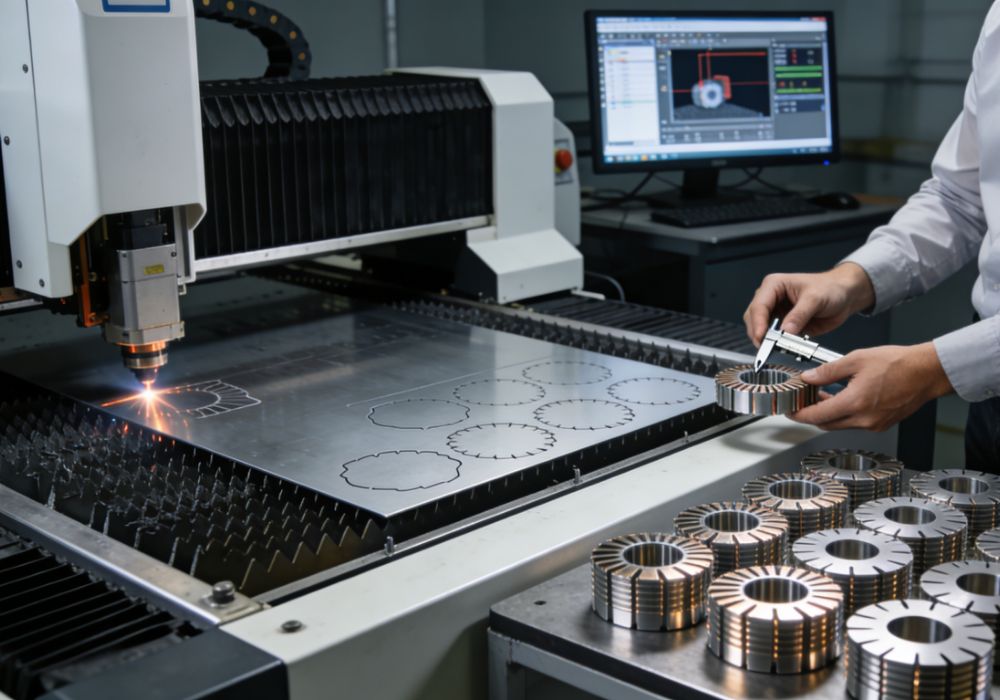
  • Stamping (Punching with a Die): We use very precise, automated stamping machines. The cutting parts (dies) are made from super-hard carbide and are built to last for millions of cuts while staying incredibly accurate. We have a strict schedule for keeping our dies in perfect shape and use automatic camera systems to check the parts as they are made. This gives us a very clean cut with almost no bending of the steel. It also guarantees that any rough edges (burrs) are tiny (less than 10 microns high), which is important for preventing electrical shorts between the layers.
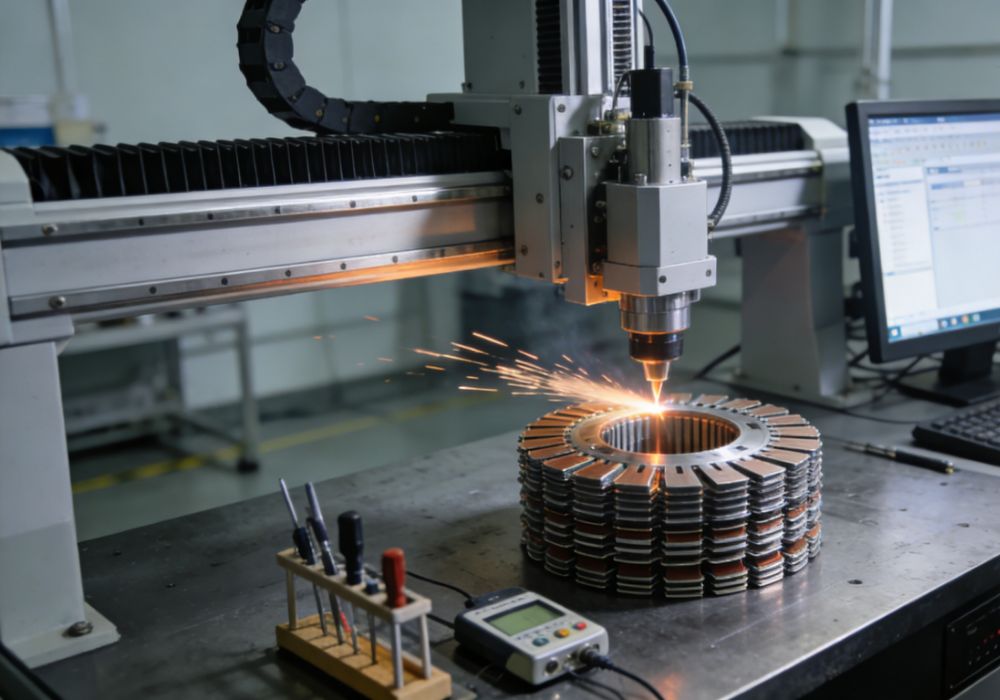
  • Laser Cutting: This method is great because it lets us easily make new designs for testing or for smaller orders. We use modern fiber lasers and adjust them perfectly to make sure the heat from the laser doesn’t damage the steel nearby (the Heat Affected Zone or HAZ). After cutting, we can heat the parts in a special oven to fix any stress in the metal and bring back its best magnetic qualities.
  • For the most complicated shapes, we use Wire EDM cutting, also known as Wire EDM (Electrical Discharge Machining). This is done with CNC (Computer Numerical Control) Machining. For special jobs, we can also use other advanced methods, like chemical cutting (photochemical etching) with a ferric chloride etchant.

Finishing and Heat Treatment

  • After the shapes are cut, we smooth them out in a process called deburring. This step removes any tiny, sharp edges, which are called burrs. The surface of each piece of the fan motor core lamination must be very smooth to make a good final stack.
  • Heating to Relieve Stress (Annealing): This is a very important step that happens after cutting. We heat the laminations in special long ovens where we can control the temperature and the air inside very carefully. This process fixes the stress caused by cutting and brings back the steel’s best magnetic performance.

Stacking and Insulation Technologies

  • Special Coatings for Insulation: We have many types of coatings, including organic (C6) and inorganic (C5) ones. Our advanced C6 coating has a special glue in it. When we heat the stack of laminations, this glue melts and then hardens, sticking the whole stack together into one solid piece. This coating is great for stopping electrical shorts between the layers. It helps the motor work well for many years.
  • Methods for Stacking and Joining:
    • Interlocking: A good, low-cost way to make a core that is fairly stiff and strong.
    • Welding (Laser or TIG): This makes the core very strong. We use carefully controlled laser welding to make sure the heat affects only a very small area. This helps prevent energy loss.
    • Gluing / Self-Bonding: This is the best method for high-performance motors. It has many benefits: It provides the best electrical insulation, prevents shorts between layers, helps to soak up vibrations (which makes the motor much quieter), and creates a very strong and stable solid core.

Quality You Can Trust: Sino's Promise

Making sure our quality is perfect is the most important job at Sino. We check our work at every single step. We measure everything to make sure all the sizes and shapes are exactly right. We measure the height of any rough edges (burrs) to make sure every piece is smooth. We check how perfectly round the stack is (its concentricity) to ensure it will spin without wobbling. Quality control is key for every fan motor core lamination we produce.

We also test the finished parts. We use a special machine called a core loss tester to measure exactly how much energy is wasted as heat in the core. We also test the motor’s performance to be certain that it works just like the design said it would. We even measure how well our insulation coating resists electricity to prove it prevents short circuits.

A fan motor core lamination is a part that requires a lot of careful engineering. At Sino, our company is built on being experts in this difficult field. By combining our deep knowledge of materials, our skills in advanced shape design, and our precise manufacturing methods, we provide the core parts that help our customers build motors that use less energy, run quieter, and last longer.

Contact us today. Let our engineers work with you to create the next great fans and air-moving products.