
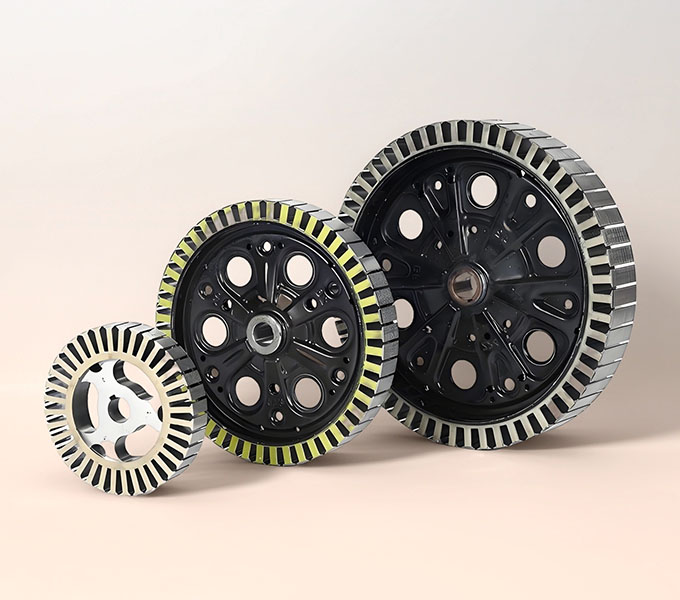
At Sino, we make electric motors better. We know the motor core is the most important part of your product. It decides how well it uses energy, how powerful it is, and how long it lasts. We use a special process for this called motor lamination bonding. This method joins the thin metal plates inside a motor. This makes them strong and helps them work very well.
Our advanced motor lamination bonding service makes these features much better than old methods like welding or locking plates together. Our work helps your products stand out.
When you need the best performance, you can trust Sino. We give you a perfectly bonded core that provides a clear edge over your competition. It works by making huge cuts in wasted energy, providing better heat control, and offering the very best performance against Noise, Vibration, and Harshness (NVH). Our motor lamination bonding service is a partnership where we work with your engineers. Our goal is to change your motor into one solid, high-performing magnetic part.
For a long time, people held motor plates together with simple methods. They used physical parts to fasten the plates, like rivets or stakes. Some even used welding, such as TIG/MIG welding or laser welding. But these old ways can cause problems:

Parts can get loose over time.

The motor can vibrate and make a loud humming sound.
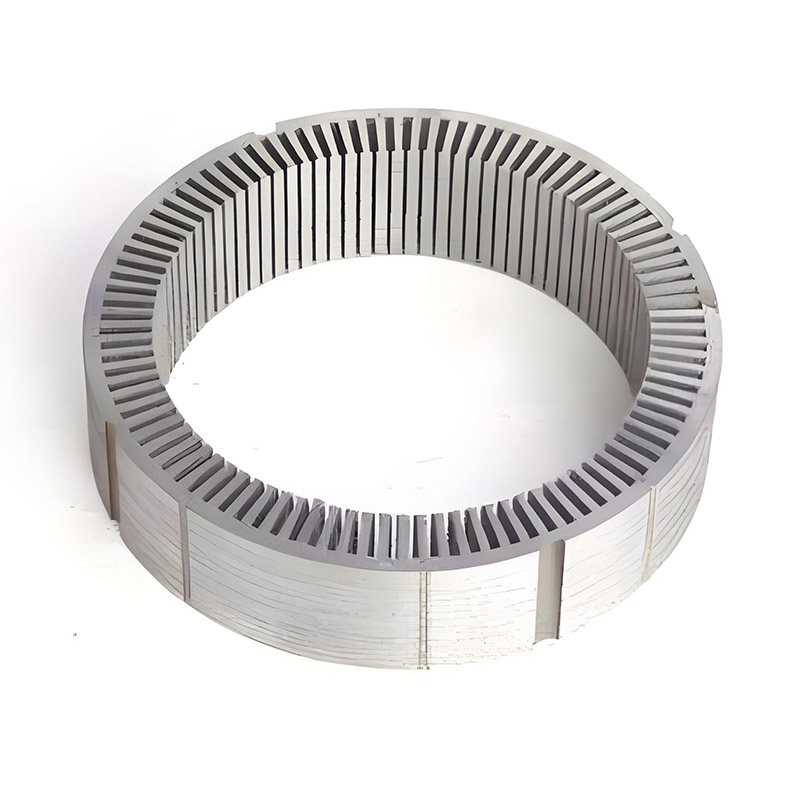

They create small gaps that hurt the motor's power.

Welding can harm the special steel plates. This harms the motor's power.
For products that need to be the best, the benefits of using glue for motor lamination bonding are very clear and easy to see when you compare it to the old ways.
Feature / Performance Metric | Sino Adhesive Bonding | Welding (TIG, Laser) | Mechanical Interlocking |
Core Loss / Efficiency | Excellent (Very little wasted energy) | Poor to Fair (Welding can create short circuits) | Fair to Good (Can damage the insulation) |
NVH Performance | Excellent (Naturally stops vibrations) | Fair (Can add stress and shakes) | Poor (The metal plates can rattle) |
Heat Movement | Excellent (Gets rid of air gaps that trap heat) | Good (Metal touches on the outside) | Poor (Air gaps are trapped between plates) |
Structural Strength | Excellent (A single, solid, even structure) | Excellent (Very strong in the welded spots) | Fair (Not as stiff or strong against twisting) |
Design Freedom | Excellent (No limits on the shape) | Fair (Needs spots on the outside for welding) | Poor (Needs space for locking parts) |
Material Thickness | Excellent (Perfect for very thin metal plates) | Poor (Hard to do on plates thinner than 0.35mm) | Fair (Thin metals can tear) |
The old ways have clear limits. For example, welding can cause electrical short circuits. Interlocking gives you less power in the same space and makes more noise. Our advanced motor lamination bonding processes solve all of these problems. At Sino, we have a better way. Our use of adhesive for motor lamination bonding is the future for all types of motors.
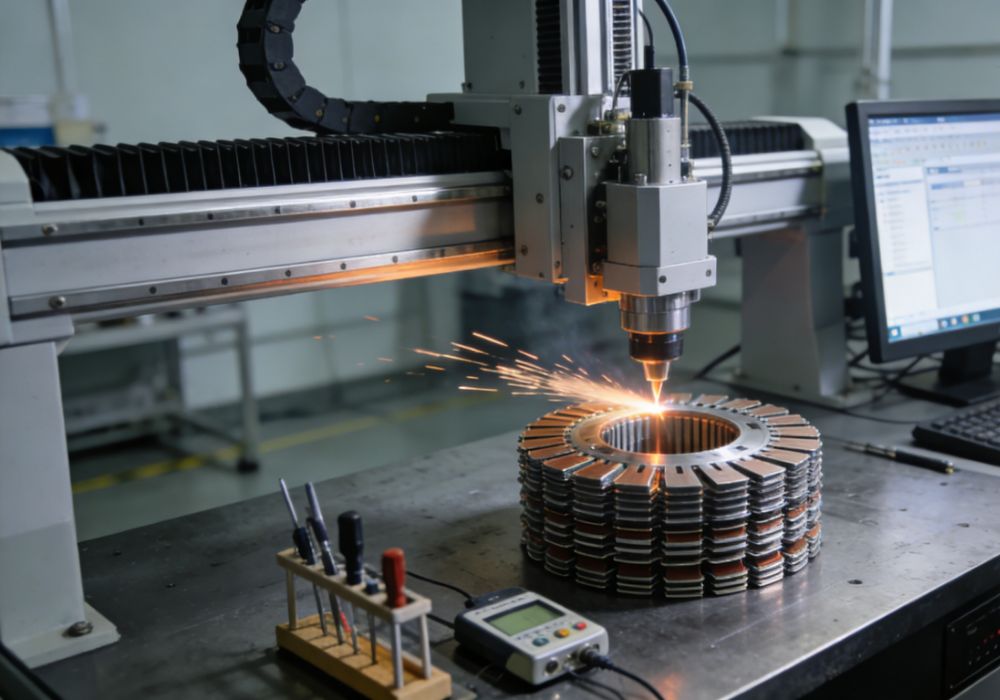
Choosing Sino’s motor lamination bonding service is a smart choice to get the best results. Our process gives you a group of good things you can’t get with old assembly methods. We help you build a better product that is stronger and more dependable.
Our motor lamination bonding process keeps each metal plate electrically separate from the next. This fixes the main reason for energy loss, called eddy currents. This means the motor uses less electricity to do the same job. This allows you to use thinner steel plates, helping your motors get higher efficiency ratings. It also means less wasted heat and a much longer run time for battery-powered products. Our bonding process creates very high resistance between plates, keeping the energy loss inside each thin sheet. Customers who switch from welded cores have seen energy loss drop by 20% to 50%. This is a direct and big improvement in motor efficiency. This is very important for meeting standards set by groups like the U.S. Department of Energy (DOE).
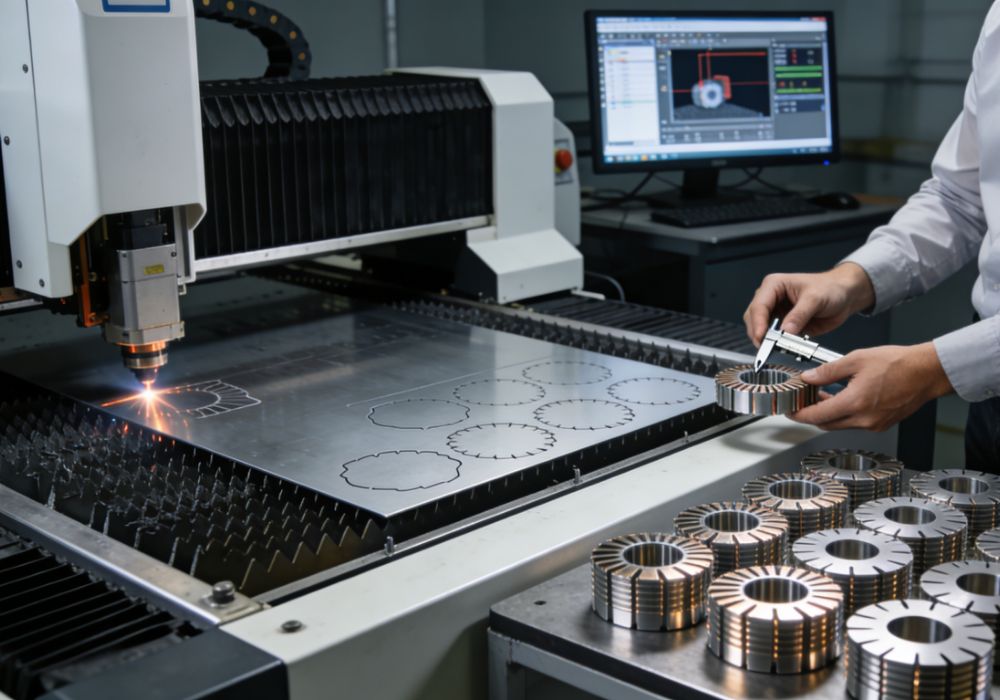
We give your motor a much stronger structure. A core bonded by Sino is like a single, solid block. It is very strong and can handle a lot of force and high spinning speeds. This even bond stops the plates from spreading apart. It makes sure the motor’s strength and performance last for its entire life. The final bonded core is very strong and stiff. This gives it great resistance to impacts and stops the plates from peeling apart. Our motor lamination bonding process spreads stress out evenly, so the whole core is strong.
Nobody likes a noisy motor. The layer of glue in our motor lamination bonding acts like a cushion. It soaks up tiny vibrations and gets rid of the rattling or humming you often hear in motors put together with mechanical parts. A bonded stack acts like a single, solid part. This results in a very quiet and smooth-running motor that makes customers happy. A bonded core is a solid, highly damped cylinder. Its natural vibration points are pushed far above the motor’s normal operating speeds. This leads to a measurable drop in the sound level (dB) while the motor is running. This is very important for products like luxury cars and quiet home appliances.
Our motor lamination bonding process uses a special glue that helps move heat. This glue fills in the tiny air gaps that trap heat. This creates a clear path for heat to get out of the motor. This improved heat management lets your designs be more powerful and run longer without risking damage from getting too hot. Putting a heat-moving polymer in place of air gaps means the motor does not get as hot when it’s working hard. This directly lets you increase your motor’s continuous power. We also provide excellent protection from rust, so the motor parts will last a long time.
Bonding gets rid of the need for interlocking tabs or weld spots that take up valuable space. This frees up your engineers to use the entire metal plate to make the magnetic part work as well as possible. This allows for smaller, lighter, and more powerful motor designs. With motor lamination bonding, you can get more power from a smaller motor. This gives you more power for the size and improved twisting force (torque). This freedom helps engineers create amazing new things. We can also fit more power into the same space. Most importantly, our process protects the special steel and improves its magnetic properties.
At Sino, we have made our methods for stacking plates perfect. We use two main methods to make sure we have the best choice for your project. We can use plates that come with a self-bonding glue already on them for making lots of motors quickly. We can also apply glue ourselves for special projects. It all starts with the best materials, from cutting the plates to the final hardening of the glue. We also make sure the metal is perfect with steps like heat-treating the electrical steel.
This is our main method for strength and custom designs. It is also called full-surface bonding.
This way is great for making many motors very quickly. It is also known as the self-adhesive process. The metal plates come to us with a special glue, called a Backlack coating, already on them. We use this advanced Backlack technology to speed things up. The process of stamping and bonding can happen at almost the same time. Heat from our tools activates the glue, and the core is bonded as it is built.
The quality of a motor starts with its parts. Sino uses only the best metals and glues for our motor lamination bonding process.
Every metal plate gets a special insulation coating. This coating protects the metal and helps it work better. All these parts work together to guide the magnetic energy flow and reduce wasted energy.
You can find cores made with our motor lamination bonding in many different industries. Our bonded motor cores are used in many exciting products. We are a key part of modern electric transportation.
We make cores for electric vehicle (EV) motors and hybrid electric vehicle (HEV) motors. Our work is found in powerful motors that drive the car and other car parts.
We build cores for strong industrial motors and precise servo motors used in factories.
Our light and strong cores are perfect for planes and drones.
You can find our technology in quiet air conditioning systems and many other home appliances.
Our precise cores are used in sensitive medical equipment.
We are proud to build parts for renewable energy systems. This includes generator cores for wind turbines and transformer cores for the power grid.
From the main stator core and rotor core to a complete motor assembly, Sino can help. We can help with every part of the motor system, including providing complete heat management solutions.
We ask our partners to look at the Total Cost of Ownership (TCO). This means thinking about the long-term savings. The money you save from a better motor often outweighs the starting cost. Our Promise of Top Quality is built into every step:
We check and approve all steel and glues very carefully.
We use automatic camera systems to check important measurements as we build.
We control the stacking, alignment, and curing steps precisely for a perfect bond.
We check finished cores with advanced machines to test their measurements, energy loss, and bond strength.
We follow the highest standards in everything we do. Our work is respected by leading engineering groups. We also watch the amazing work done by top research labs to stay ahead of the curve.
Feature | Sino’s Bonding Solution | Why It Matters for You |
Core Strength | Uses strong glues to make a solid part. | Your motor will last longer and handle tough jobs. It will be stronger and more dependable. |
Motor Efficiency | The glue fills all gaps to stop energy loss. | You get a more powerful motor that uses less electricity, saving money and energy. |
Noise Level | The bonding layer soaks up shakes and rattles. | Your product will be very quiet, which customers love. |
Heat Control | Special glues help heat flow out of the core. | The motor runs cooler, so it is less likely to break down. This is part of our heat management solutions. |
Design Freedom | No need for old methods like tabs or locks. | Your engineers can design smaller, lighter, and more powerful motors for the future. |
In today’s world, everyone wants motors that are more efficient and more powerful. The way you assemble your motor core is very important. Sino’s advanced motor lamination bonding provides the engineered solution to improve every key part of your motor’s performance.
Contact our engineering team today to talk about your next project. Discover how a partnership with Sino can set you apart from the competition.